
We’ve watched too many businesses burn weeks of campaign time because they picked the wrong number type for their SMS program. They register a long code, launch a marketing blast, and within hours half their messages get filtered by carriers. The fix wasn’t a better message. It was the wrong infrastructure choice from day one.
The long code vs short code decision sits at the foundation of every A2P messaging strategy, whether you’re a telecom operator provisioning numbers, an SMS aggregator routing traffic across networks, or an enterprise sending OTPs and alerts to customers. Pick wrong, and you deal with throttled throughput, blocked messages, or wasted budget. Pick right, and your delivery rates, cost structure, and compliance posture all line up with what your business actually needs.
This guide breaks down what long code and short code actually mean, how they perform under real sending conditions, what they cost, and which one fits your use case across the US, UK, Africa, and Europe.
What Is Long Code in SMS?
A long code is a standard 10-digit phone number used to send and receive SMS messages, the same format as a regular mobile number. In the US, this is often called 10DLC (10-Digit Long Code), and it’s registered through The Campaign Registry (TCR) for application-to-person (A2P) traffic.
Long code numbers look and behave like a normal phone number. Customers can text back, save the number in their contacts, and treat the conversation like they’re messaging a real person. That’s the whole appeal. It feels human.
How Long Code Works for A2P Messaging
When a business sends A2P messages through long code, the message routes through a carrier’s standard SMS network using the same infrastructure as P2P (person to person) texts. Carriers monitor this traffic closely because long code wasn’t originally built for high volume business messaging, it was built for individuals texting each other.
We worked with a regional bank’s customer support team that switched their appointment reminders from email to long code SMS. Response rates jumped because customers could reply “RESCHEDULE” directly in the thread, something a short code program would have made feel more transactional. That two way, conversational quality is long code’s biggest strength.
Key takeaway: Long code is ideal when conversation and personal tone matter more than raw volume.
What Is Short Code in SMS?
A short code is a 5 to 6 digit number leased specifically for high volume business SMS, things like OTPs, alerts, and marketing campaigns. Carriers treat short code traffic as pre-vetted, which is why it moves through the network faster and with fewer filtering issues than long code.
Short codes exist because carriers needed a way to separate trusted, high volume business senders from regular consumer traffic. The CTIA (Cellular Telecommunications Industry Association) sets the guidelines that govern how short codes get approved and used in the US, and similar vetting frameworks exist with mobile network operators in the UK and across Europe.
Dedicated vs Shared Short Codes
A dedicated short code belongs to a single business. Nobody else sends traffic through that number, which gives you full control over your sender reputation and message volume. A shared short code splits one number across multiple businesses using keyword routing, which costs less but means your delivery and reputation depend partly on other senders’ behavior.
A fintech client I advised moved from a shared short code to a dedicated one after seeing inconsistent delivery during another tenant’s high volume promotional push. Their OTP delivery times dropped from several seconds to near instant once they had the lane to themselves.
Key takeaway: Dedicated short codes give predictable performance, shared short codes give a lower entry cost.
Long Code vs Short Code: Key Differences
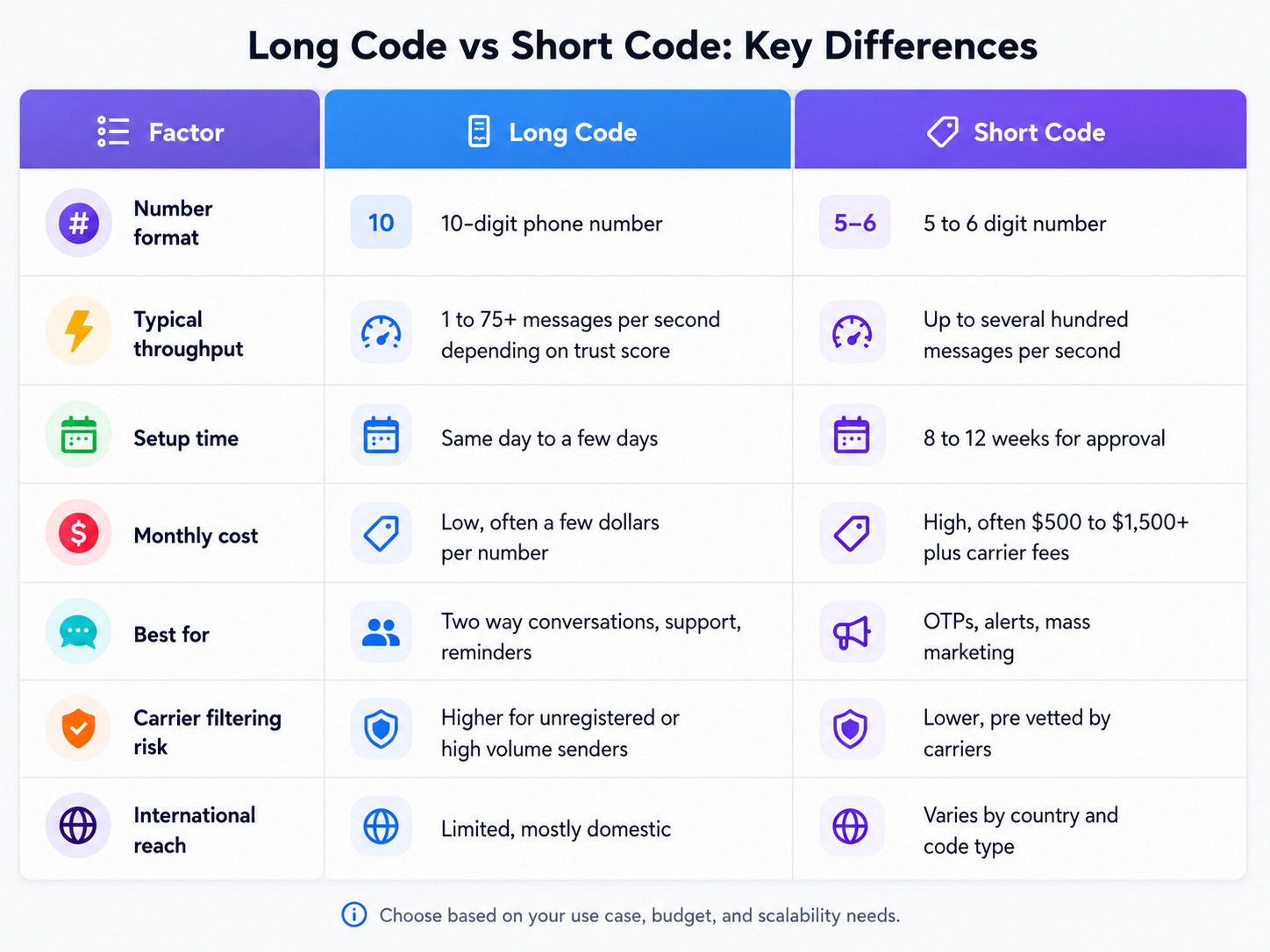
This table answers the long code vs short code SMS pricing comparison question most enterprises ask first. Short code costs more upfront, but it buys you throughput and trust that long code simply isn’t built to handle at scale.
Long Code SMS Sending Limits and Throughput Explained
Long code throughput in the US runs through the 10DLC trust score system. Carriers assign throughput tiers based on how well your business is vetted. Brands with verified EIN numbers and clean sending history get higher tiers, unverified senders get throttled hard.
How Many Messages Can You Send Per Day With Long Code?
There’s no single fixed daily cap. Daily volume depends on your assigned messages per second (MPS) rate, which can range from roughly 1 MPS for low trust senders up to much higher tiers for fully vetted brands. At 1 MPS, the math works out to tens of thousands of messages in a 24 hour window in theory, but carriers also apply daily volume thresholds that vary by campaign type, so real world numbers usually land lower.
We’ve seen enterprises assume long code can match short code volume just because the math checks out on paper. It doesn’t, because carrier filtering kicks in long before you hit theoretical limits if your sending pattern looks like a bulk blast instead of normal conversation traffic.
Key takeaway: Long code throughput is a moving target tied to trust score, not a fixed number you can plan around for large campaigns.
Is Short Code More Expensive Than Long Code?
Yes, short code costs significantly more than long code on a monthly basis, but it’s priced for volume and reliability, not casual use. A dedicated short code lease alone often runs into four figures monthly before you add carrier connectivity fees, while long code numbers typically cost a few dollars per month per number.
The real comparison isn’t sticker price, it’s cost per delivered message at scale. An aggregator sending millions of OTPs monthly will often find short code cheaper per message once you factor in the lower failure and retry rates compared to long code traffic that’s getting filtered.
A telecom operator I worked with ran the numbers on their OTP traffic and found that switching from long code to a dedicated short code cut their effective cost per successfully delivered OTP by nearly a third, even with the higher base lease, because retries on the long code route had been quietly eating their margin.
Key takeaway: Compare cost per delivered message, not just the monthly lease price.
Can Long Code Be Used for OTP Messages?
Technically yes, but it’s not recommended for most businesses. Long code can carry OTP traffic, and some smaller apps still do this, but delivery speed and consistency lag behind what short code offers, which matters a lot when a customer is sitting on a login screen waiting for a code.
Why Is Short Code Used for Verification Codes?
Short code is the standard for OTPs because carriers prioritize and pre-clear this traffic, giving it faster routing and fewer delays. When a user requests a one time password, every second of delay increases the chance they abandon the login or transaction. Short code’s higher throughput and lower filtering risk make it the safer infrastructure choice for anything time sensitive.
Key takeaway: Use short code for OTPs whenever volume justifies the cost. Reserve long code OTP use for low volume or early stage products testing the waters.
Long Code vs Short Code for A2P SMS Compliance
Compliance looks different depending on the number type and the country you’re sending from. In the US, long code A2P traffic must be registered through The Campaign Registry under the 10DLC framework, with brand and campaign details submitted for carrier review. Unregistered long code traffic gets aggressively filtered by major carriers.
Short codes go through a separate, more rigorous CTIA vetting process before they ever send a single message, covering use case, opt in and opt out language, and message content. This upfront scrutiny is exactly why short code traffic moves through carrier networks with less friction afterward.
In the UK and across Europe, mobile network operators and regulatory bodies apply their own sender ID and short code approval processes, often tied to local telecom regulators rather than a single shared registry like TCR. Africa’s compliance landscape varies even more by country, with some markets requiring local short code registration through the national telecom regulator before any A2P traffic can legally flow.
Key takeaway: Compliance isn’t optional friction, it’s the mechanism that determines whether your messages actually reach inboxes.
Does Long Code SMS Work Internationally?
Long code generally works best for domestic traffic. Sending long code SMS across borders runs into inconsistent carrier support, higher filtering, and in many countries, regulatory restrictions on using a foreign or unregistered number for business messaging.
For SMS aggregators managing multi-country traffic, this is where SMS interconnect agreements and local number provisioning matter more than the long code vs short code label itself. A long code number provisioned and registered locally in the UK behaves very differently than a US long code trying to reach UK subscribers.
Key takeaway: International A2P messaging usually needs local number provisioning, not a single long code stretched across borders.
Which Is Faster, Long Code or Short Code SMS?
Short code is faster for high volume sending because of its higher throughput ceiling and lower carrier filtering risk. For single message delivery speed in a one to one conversation, the difference is often negligible to the end user, both arrive within seconds under normal network conditions.
The speed gap shows up at scale. A marketing campaign sending 500,000 messages will clear a short code queue far faster than the same volume pushed through a 1 MPS long code number, where the math alone stretches delivery across hours.
Key takeaway: Speed per message is similar, speed at volume strongly favors short code.
What Businesses Should Avoid Using Long Code SMS?
Businesses running high volume marketing campaigns, time sensitive OTP delivery at scale, or mass alert systems should avoid relying solely on long code. The throughput ceiling and carrier filtering risk make it a poor fit once your sending pattern stops looking like normal conversation.
When to Use Short Code Instead of Long Code
Switch to short code once you’re sending consistent high volume traffic, need predictable delivery for time sensitive messages, or you’re scaling a program where filtering related failures start showing up in your delivery reports. If your support team is still having back and forth conversations with individual customers, long code remains the better fit for that specific use case.
Key takeaway: Match the number type to the sending pattern, not the other way around.
Best SMS Number Type for Enterprise Messaging
Most mature enterprises end up running both. Long code handles support conversations, appointment reminders, and low volume personalized outreach. Short code handles OTPs, fraud alerts, and marketing campaigns where volume and delivery speed carry more weight than conversational tone.
Telecom operators and SMS aggregators managing this mix benefit from a platform that can route traffic intelligently between number types based on use case, rather than forcing every message type through a single channel. That’s the kind of routing logic TeleOSS builds into its SMS gateway software, so operators don’t have to manually manage which traffic goes where.
Key takeaway: The right answer to long code vs short code is rarely “pick one.” It’s “route traffic to the right one.”
Quick Answer Summary
What is the main difference between long code and short code SMS?
Long code uses standard 10-digit numbers for low to medium volume, conversational messaging. Short code uses 5 to 6 digit numbers built for high volume, pre vetted business traffic like OTPs and marketing. The core difference is throughput, cost, and carrier trust level.
Is short code worth the extra cost?
For high volume senders, yes. The lease cost is higher, but better delivery rates and fewer filtering issues usually lower your real cost per delivered message at scale.
Can I use long code for marketing SMS?
You can for small lists, but carriers filter long code marketing traffic more aggressively at volume. Short code or registered 10DLC campaigns built for marketing use cases perform more reliably.
Does short code guarantee better delivery rates?
Not automatically, but its pre-vetted status and dedicated throughput generally produce more consistent delivery than unregistered or low trust long code traffic.
Common Mistakes Businesses Make
Assuming long code can scale like short code.
Many teams launch a campaign on long code expecting short code level volume, then get blindsided by carrier filtering once sending patterns look automated.
Skipping 10DLC registration.
Unregistered long code A2P traffic gets throttled or blocked outright by major US carriers. Registration through TCR isn’t optional paperwork, it directly affects whether your messages arrive.
Choosing shared short code for sensitive traffic.
OTPs and fraud alerts on a shared short code can suffer if another tenant on that code triggers carrier scrutiny or spam complaints.
Ignoring local compliance for international sending.
Using a single long code or short code across multiple countries without local registration leads to inconsistent delivery and, in some markets, outright non-compliance.
Underestimating short code approval timelines.
Waiting until a launch date is close to apply for a short code is a common planning mistake. The 8 to 12 week approval window needs to be built into your roadmap early.
Best Practices for Choosing Between Long Code and Short Code
Map your use case before you map your budget. Decide whether your traffic is conversational or transactional first, then let that decision guide whether long code or short code fits.
Register early. Whether it’s 10DLC registration for long code or CTIA vetting for short code, start the process well ahead of your launch date so approval delays don’t block your campaign.
Separate your traffic types. Don’t run OTPs and marketing blasts through the same number, regardless of code type. Mixing use cases on one number increases filtering risk for everything sent from it.
Monitor your delivery and filtering reports regularly. Carriers update filtering rules often, and a route that performed well last quarter can degrade if your sending pattern or trust score changes.
Work with an aggregator or platform that supports both number types. Flexibility to route traffic by use case beats locking your entire program into one number type.
Conclusion
The long code vs short code decision isn’t about which one is universally better, it’s about matching the number type to how you actually communicate with customers. Long code wins for conversational, lower volume messaging where a personal tone matters. Short code wins once you’re sending high volume, time sensitive traffic like OTPs and marketing campaigns where throughput and delivery consistency carry real business weight.
Telecom operators, SMS aggregators, and enterprises that get this choice right spend less time fighting carrier filtering and more time focused on what the messages are actually supposed to accomplish. If you’re still routing all your traffic through one number type and wondering why delivery rates aren’t where they should be, that’s usually the first place to look.
Talk to TeleOSS about routing your A2P traffic across the right mix of long code and short code, built into one SMS gateway platform that handles the compliance and provisioning work for you.
FAQs
What is the difference between long code and short code SMS?
Long code uses a standard 10-digit number suited for conversational, lower volume messaging. Short code uses a 5 to 6 digit number built for high volume, pre vetted business traffic. The practical difference shows up in throughput, cost, and how carriers filter the traffic, short code moves faster at scale because it’s already been reviewed.
Is long code or short code better for bulk messaging?
Short code is generally better for bulk messaging because of higher throughput and lower carrier filtering risk. Long code can technically send bulk traffic, but it’s built for normal conversational volume, so large campaigns often hit filtering issues or slow delivery once sending patterns look automated rather than personal.
How much does short code SMS cost compared to long code?
Short code typically costs hundreds to over a thousand dollars per month to lease, plus carrier connectivity fees, while long code numbers often cost just a few dollars monthly. The gap reflects what you’re paying for: short code buys pre vetted status, higher throughput, and lower filtering risk that long code doesn’t offer at the same price point.
Can enterprises use long code for marketing messages?
Yes, for smaller, targeted campaigns with proper 10DLC registration. Large scale marketing on long code runs a higher risk of carrier filtering since the infrastructure wasn’t designed for bulk promotional traffic. Enterprises running sizable marketing programs typically see better, more consistent delivery through short code or properly tiered 10DLC campaigns.
What is the sending limit for long code SMS?
There’s no fixed daily cap, sending limits depend on your assigned messages per second rate under the 10DLC trust score system. Verified, well established brands receive higher throughput tiers than unregistered or new senders. Carriers also apply additional volume thresholds based on campaign type, so actual limits vary by sender and use case.
Why do businesses use short code instead of long code?
Businesses choose short code when they need higher throughput, faster delivery at volume, and lower filtering risk than long code can reliably offer. It’s the standard choice for OTPs, fraud alerts, and large marketing campaigns where consistent, fast delivery directly affects customer experience or transaction completion.
Is long code SMS good for two-way conversations?
Yes, long code is built for exactly this. Its 10-digit format feels personal, customers can save it and reply naturally, which makes it well suited for customer support, appointment reminders, and any program where back and forth conversation matters more than raw sending volume.
Do short codes have better delivery rates than long codes?
Generally yes, because short codes are pre vetted by carriers before they’re activated, which reduces the filtering that often affects long code traffic, especially unregistered or high volume long code sending. Delivery rate differences become more noticeable as volume increases.
What is a 10-digit long code used for?
A 10-digit long code is used for standard A2P and P2P style messaging, including customer support, appointment reminders, two factor authentication for lower volume use cases, and personalized outreach. It functions like a regular mobile number, which makes it ideal for conversational messaging rather than mass campaigns.
Which one is more compliant for A2P messaging, long code or short code?
Short code generally carries a stronger compliance position because it goes through CTIA vetting before activation. Long code can be fully compliant too, but it requires proper 10DLC registration through The Campaign Registry. Without that registration, long code A2P traffic faces a much higher risk of carrier filtering and non-compliance flags.