
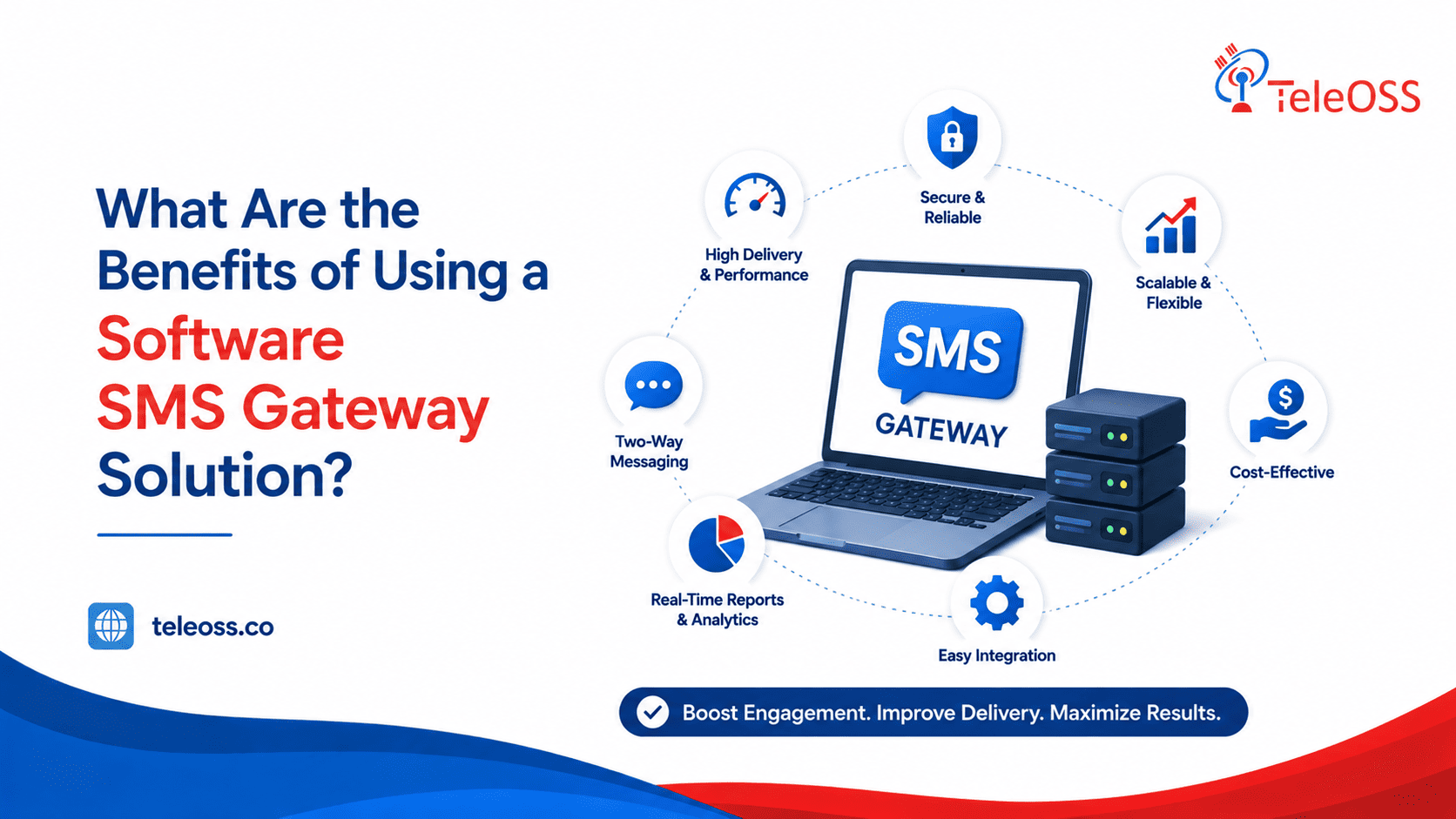
If you have ever waited on a call center to confirm a delivery, or watched a marketing team burn a weekend printing flyers, you already understand why businesses are moving away from manual communication. A software SMS gateway solution changes that picture entirely. It lets you send, receive, and manage text messages at scale, without the overhead of legacy systems or third party bottlenecks.
I have worked with telecom operators and enterprise messaging teams for over a decade, and the pattern is always the same. Once a business switches to a proper SMS gateway solution, response times drop, costs shrink, and customer engagement climbs. This article breaks down exactly why that happens, what benefits you should expect, and how to avoid the common traps that slow teams down when they adopt one.
By the end, you will know what an SMS gateway solution actually does, which features matter most, and how to evaluate one for your own operation.
What Is an SMS Gateway Solution and How Does It Work?
An SMS gateway solution is software that connects your business systems, such as a CRM, billing platform, or marketing tool, to mobile networks so you can send and receive text messages programmatically. Instead of typing messages one by one, the gateway routes thousands or millions of messages through telecom networks using protocols like SMPP, HTTP, or SIGTRAN.
Think of it as a translator sitting between your application and the mobile carrier. Your system sends a request, the gateway formats it correctly, picks the best route, and pushes it to the recipient’s network. On the way back, delivery reports and replies flow through the same channel.
Example: A regional bank in Kenya replaced its manual SMS desk with a software gateway to send OTPs for mobile banking. Before the switch, verification codes sometimes arrived two or three minutes late, frustrating customers mid-transaction. After deployment, average delivery time dropped under five seconds because the gateway selected the fastest available route automatically.
Key takeaway: An SMS gateway solution is not just a messaging tool. It is infrastructure that decides how, where, and how fast your messages travel.
Why Are Businesses Switching to Software-Based SMS Gateway Solutions?
Businesses are moving to software-based gateways because manual and semi-manual messaging methods simply cannot keep up with volume, speed, or compliance demands. A software solution centralizes control, gives you visibility into every message, and scales without adding headcount.
Telecom operators in particular are under pressure to offer A2P messaging services to enterprise clients while keeping delivery rates high and fraud low. A software gateway gives them the routing intelligence and monitoring tools to do that without building everything from scratch.
Example: A UK based e-commerce retailer previously relied on a mix of email and a small SMS reseller account for shipping updates. During peak season, the reseller’s limited throughput caused hours-long delays. Switching to a dedicated SMS gateway solution lets them push over 500,000 delivery notifications in a single day without a backlog.
Key takeaway: Volume, speed, and reliability are the three pressures pushing most businesses toward software-based gateways.
Key Benefits of Using an SMS Gateway Solution
Cost-Effective Bulk Messaging
Sending messages through a software gateway costs a fraction of manual calling or printed mail. Bulk pricing models mean the more you send, the lower your per-message cost typically becomes, which matters a lot for operators managing millions of transactions monthly.
Example: A logistics company in Germany cut its customer notification costs by nearly 40% after moving from a call-based confirmation process to automated SMS delivery updates.
Key takeaway: Lower cost per message frees up budget for growth instead of routine operations.
Built to Scale With Your Business
A software SMS gateway solution handles the jump from a few thousand messages a month to millions without a system overhaul. This matters most during seasonal spikes, product launches, or when a telecom operator onboards a new enterprise client.
Example: A US based retail chain used the same gateway setup for both a small loyalty SMS program and, two years later, a nationwide flash sale campaign sending over two million texts in 48 hours. No infrastructure change was needed, only a capacity upgrade.
Key takeaway: Scalability protects you from costly platform migrations as your messaging needs grow.
Global Reach Through Multiple Protocols
Modern SMS gateway software supports protocols such as SMPP, HTTP, and SIGTRAN, which allow messages to travel across different carrier networks and countries with minimal friction. This is especially important for businesses operating across the USA, UK, Africa, and Europe, where carrier requirements vary widely.
Example: An SMS aggregator serving corridors between Europe and West Africa found that certain routes had inconsistent delivery due to local carrier filtering. By using a gateway with dynamic least cost routing, they redirected traffic through better performing routes and recovered a delivery rate drop of nearly 15 percent within a week.
Key takeaway: Multi-protocol support is what makes cross-border messaging actually reliable, not just technically possible.
Real-Time Analytics and Reporting
A good SMS gateway solution gives you live traffic monitoring, sms delivery reports, and campaign analytics. This visibility lets you catch problems, like a sudden drop in delivery rates on a specific corridor, before they affect your whole customer base.
Example: A fintech company noticed through gateway reporting that OTP delivery on one mobile network had dropped to 60 percent overnight. The dashboard flagged the anomaly within minutes, letting the technical team switch routes before it affected login volumes at scale.
Key takeaway: Real-time data turns messaging from a guessing game into a measurable, manageable channel.
Stronger Security for Sensitive Data
Security features like SSL encryption, message filtering, and whitelist or blacklist management protect both your business and your customers. This matters most for OTPs, banking alerts, and healthcare reminders, where data sensitivity is high.
Example: A hospital network sending appointment reminders and lab results via SMS required strict compliance with regional data protection rules. Their gateway’s encryption and access controls allowed them to pass a third party security audit without any major findings.
Key takeaway: Strong security is not optional when your messages carry personal or financial information.
Omnichannel Messaging Integration
SMS gateways today rarely work in isolation. Many connect with email, OTT messaging platforms like WhatsApp, and push notifications, letting you manage all customer communication from one system.
Example: A telecom operator in South Africa combined SMS and OTT messaging gateway support so that when a customer’s WhatsApp message failed to deliver due to no internet connection, the system automatically fell back to SMS. This fallback logic recovered nearly 20 percent of otherwise lost messages.
Key takeaway: Omnichannel support acts as a safety net, making sure your message reaches the customer through whichever channel actually works.
Higher Customer Engagement
Features like two-way messaging, keyword-based replies, and personalized workflows turn SMS from a one-way broadcast into a real conversation. This drives higher response rates compared to email or app notifications, which often go unread.
Example: A retail brand running a “text STOP to unsubscribe, text HELP for support” campaign saw customer support tickets drop by 25 percent, since customers could resolve simple questions directly through automated SMS replies.
Key takeaway: Two-way SMS turns a notification channel into a support and engagement channel.
Flexible APIs and Routing Rules
Customizable APIs let your development team integrate the gateway into existing systems, whether that is a CRM, billing platform, or custom app. Routing rules let you control exactly how messages are sent, which matters for cost control and delivery performance.
Example: An SMS aggregator managing traffic across a dozen countries used custom routing rules to prioritize premium routes for OTPs while sending marketing traffic through more cost-efficient long code routes, balancing speed and budget without manual intervention.
Key takeaway: Flexibility in APIs and routing means the gateway adapts to your business, not the other way around.
Reliable Uptime With Failover Support
High-availability architecture and failover mechanisms keep your messaging running during peak load or unexpected outages. For telecom operators and enterprises alike, downtime during a critical campaign or emergency alert can be costly.
Example: During a regional network outage, an operator’s SMS gateway automatically failed over to a backup route, keeping emergency alert delivery uninterrupted for its subscriber base while competing providers experienced hours of downtime.
Key takeaway: Failover support is what separates a gateway you can depend on from one that leaves you exposed during outages.
A Greener Way to Communicate
Moving from paper notices and printed statements to SMS reduces paper waste and supports sustainability goals, something more enterprises are being asked to report on by stakeholders and regulators.
Example: A utility company that switched billing reminders from printed mail to SMS estimated it saved over 50,000 sheets of paper annually, a small but measurable step toward its sustainability targets.
Key takeaway: Digital messaging is a practical way to reduce environmental impact while cutting costs at the same time.
SMS Gateway Solution vs Traditional Communication Methods
| Factor | SMS Gateway Solution | Traditional Methods (Calls, Mail, Manual SMS) |
| Speed | Seconds, at scale | Minutes to days |
| Cost per message | Low, especially at volume | High, especially for calls and print |
| Scalability | Handles millions of messages | Limited by staff and manual effort |
| Reporting | Real-time delivery and engagement data | Little to no visibility |
| Security | Encryption, filtering, access controls | Minimal or inconsistent |
| Global reach | Multi-protocol, multi-carrier support | Limited by local infrastructure |
How Different Industries Use an SMS Gateway Solution
Telecom operators use SMS gateway solutions to offer A2P messaging services to enterprise clients, generating new revenue while maintaining strong delivery performance. SMS aggregators use them to manage routing across multiple carriers and countries, optimizing for cost and reliability. Enterprises across banking, healthcare, retail, and logistics use them for OTPs, appointment reminders, order updates, and customer support.
Example: A telecom operator in Nigeria built a dedicated A2P messaging product on top of its SMS gateway software, turning what was previously just network infrastructure into a monetized service sold directly to banks and fintech companies.
Key takeaway: The same core technology serves very different business models, from network monetization to direct customer engagement.
Quick Answer Summary
What is an SMS gateway solution?
An SMS gateway solution is software that connects business systems to mobile networks, allowing companies to send and receive SMS messages at scale using protocols like SMPP, HTTP, and SIGTRAN, rather than manual methods.
Why do businesses need an SMS gateway solution?
Businesses need an SMS gateway solution to send high volumes of messages reliably, reduce communication costs, gain real-time delivery insights, and maintain security for sensitive data like OTPs and account alerts.
Who uses SMS gateway software?
Telecom operators, SMS aggregators, and enterprises across banking, retail, healthcare, and logistics use SMS gateway software to automate customer communication and scale messaging operations globally.
Is a software SMS gateway secure?
Yes, when properly configured, a software SMS gateway uses SSL encryption, message filtering, and whitelist or blacklist management to protect sensitive data and prevent spam or fraud.
Common Mistakes to Avoid When Choosing an SMS Gateway Solution
- Choosing based on price alone: The cheapest gateway often has weaker routing options, which leads to poor delivery rates on certain corridors. Balance cost against actual delivery performance data before committing.
- Ignoring protocol support: A gateway that only supports HTTP may struggle with high-throughput enterprise use cases that need SMPP. Check protocol compatibility against your actual traffic requirements early.
- Skipping failover planning: Many businesses assume uptime is guaranteed and only discover the gap during an outage. Ask vendors directly about failover architecture before signing a contract.
- Underestimating compliance needs: Sending OTPs or health related messages without proper encryption and data handling can create regulatory exposure, especially under frameworks like GDPR in Europe.
- Overlooking reporting capabilities: Without real-time analytics, problems like delivery drops on a specific network go unnoticed until customers complain. Insist on live dashboards, not just monthly summaries.
Best Practices for Getting the Most From Your SMS Gateway Solution
Test routing performance across your key corridors before full deployment, not after. Set up automated alerts for delivery rate drops so your team can react within minutes, not days. Use two-way messaging features to turn notifications into support opportunities rather than dead-end broadcasts. Review your whitelist and blacklist rules regularly to keep spam filtering accurate without blocking legitimate traffic. Combine SMS with OTT messaging fallback where possible, so a failed delivery on one channel does not mean a lost message entirely.
Conclusion
A software SMS gateway solution is no longer a nice-to-have for telecom operators, aggregators, and enterprises. It is the backbone of reliable, secure, and scalable customer communication. From cutting costs and improving delivery speed to giving you real-time visibility into every message sent, the benefits touch nearly every part of how a business connects with its customers.
If you are still relying on manual processes or a limited messaging setup, the gap between where you are and where a proper SMS gateway solution can take you grows wider every month. TeleOSS builds SMS gateway software designed for exactly this kind of scale, combining dynamic routing, strong security, and omnichannel support in one platform. Reach out to TeleOSS to see how a tailored SMS gateway solution can fit into your existing systems and grow with your business.
Need More Help?
Explore the TeleOSS Support Center for product documentation, setup guides, troubleshooting articles, FAQs, and expert support.
FAQs
What is the difference between an SMS gateway and an SMS aggregator?
An SMS gateway is the software or platform that routes messages between your application and mobile networks. An SMS aggregator is a business that operates gateways and maintains carrier relationships across multiple countries, often reselling capacity to enterprises and smaller operators who need broader reach.
Can a small business use an SMS gateway solution?
Yes. Most gateway providers offer tiered plans, so a small business can start with lower volumes and scale up as messaging needs grow. The same infrastructure that supports enterprise campaigns can handle a few thousand messages a month without extra cost or complexity.
How does an SMS gateway improve delivery rates?
An SMS gateway improves delivery rates through dynamic routing, which selects the best performing carrier path for each message in real time. It also monitors network conditions continuously, rerouting traffic away from corridors experiencing filtering or congestion issues.
Is SMS gateway software compliant with data protection laws?
Compliance depends on how the gateway is configured and which region you operate in. Reputable providers build in encryption, access controls, and data handling practices aligned with frameworks like GDPR in Europe, but businesses should confirm compliance details directly with their vendor.
What protocols do SMS gateways typically support?
Most SMS gateways support SMPP for high-throughput enterprise messaging, HTTP for simpler API-based integrations, and SIGTRAN for telecom-grade signaling. The right protocol depends on your traffic volume, technical setup, and whether you are a telecom operator or an enterprise client.
How much does an SMS gateway solution cost?
Costs vary based on message volume, destination countries, and the level of routing and security features included. Bulk pricing generally lowers the per-message cost significantly, so businesses sending high volumes typically see better rates than those with small, infrequent campaigns.